

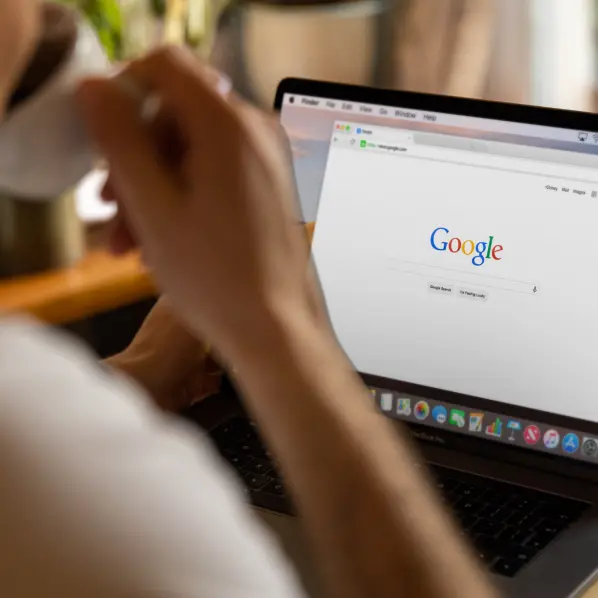
What are zero-click searches? In short, they are Google searches that end without the person clicking through to a website, because the information, action or next step they need is already available within the search results.
TL;DR: zero-click searches happen when Google answers a query or enables an action without the user visiting a website. They reduce traffic from many informational searches, but businesses can still gain enquiries and influence by becoming a trusted source, improving local visibility and creating content that gives people a reason to act.
Google has displayed weather forecasts, calculations, maps, featured snippets and knowledge panels for years. What has changed more recently, however, is the amount of information now provided directly within search results, particularly through AI Overviews and within AI Mode.
For businesses that rely on organic traffic, this creates an obvious concern. Your website may still appear, and your content may help Google produce an answer, but fewer people may visit the page itself.
Search marketing has not stopped working, but businesses must stop treating website clicks as the only sign of success; there is now a much wider picture to consider.
How common are zero-click searches?
Research published by SparkToro and Similarweb in June 2026 found that 69.5% of UK Google searches ended without a click, the highest proportion among the six countries studied. Only 23.2% resulted in a visit to the open web, meaning an independent website outside Google’s own services. Clicks to Google Maps, YouTube and Google Images were counted separately.
Websites, of course, still matter because their content can provide useful source material for AI Overviews and AI Mode. They need to remain accurate, useful and relevant, particularly when services, customer questions or market conditions change. The relationship between rankings, traffic, and results is becoming less straightforward.
What creates a zero-click search?
A direct answer box may answer a simple factual query. A local search may show opening hours, reviews, directions and a telephone button through Google Business Profile. A featured snippet may provide the necessary instruction. A knowledge panel may contain the relevant facts about a company, person or place.
AI Overviews take this a step further by gathering and summarising information from several sources. Instead of showing only a list of pages that may contain an answer, Google can present a combined response at the top of its results page.
AI Mode takes this even further still. A user can ask a detailed question, receive a synthesised answer and continue with follow up questions. It combines elements of a search results page with an ongoing conversation, allowing the user to refine the request without starting a new search.
An established number one organic position may therefore, rather ironically, attract fewer clicks. It could sit below an AI Overview, advertisements, map results, shopping features and videos.
A website’s ranking may not have fallen, but its prominence and the need to click may still have changed.
Which searches are the most affected?
Informational searches are particularly vulnerable because many short questions can be answered more quickly through AI than by clicking into a website. Queries beginning with what, when, where, who or how often can often be answered directly within an AI Overview or featured result.
A person searching for a definition, a simple process or a broad explanation may be satisfied by an AI Overview or featured snippet. Generic articles that repeat widely available information or lack sufficient technical authority and detailed explanations are therefore likely to lose more traffic.
Local searches have operated differently for some time, even before the AI boom of the last few years. Someone looking for a nearby restaurant, tradesperson or professional adviser may call, request directions, or read reviews directly from Google results. That is technically a zero-click search, but it may still prompt a valuable customer action, such as calling you or checking where you are based so they can visit or review your products.
Many of these actions can still be measured through your Google Business Profile, including calls and direction requests, a zero click search did not necessarily mean a lost opportunity. That is quite different from the wider zero click trend we are seeing now, where more of the search journey can happen without the customer ever reaching your website.
Commercial and transactional searches are generally more resistant because people often need further detail before deciding. They may want to compare services, see examples, understand pricing, check availability or assess whether they trust the business.
The greatest risk to any business is content that gives people little reason to remember your company or take that next step and enquire about it.

Does this mean SEO is no longer worthwhile?
No, SEO is still absolutely worthwhile for your marketing strategy. Google states that established SEO principles remain relevant to its generative AI search features because those features are rooted in its core ranking and quality systems. A strong website helps search engines understand your business. It provides information for standard results, rich results, and AI responses, while supporting local, commercial, and branded searches.
SEO remains important, but success cannot be judged through traffic alone anymore. A business could receive fewer low intent visits while generating more qualified enquiries, or gain visibility within AI answers (AIO) without receiving a click every time.
The question is no longer simply, “How do we make Google rank this page on our website?” It is also, “How do we make our business the source Google and AI systems trust, recognise and recommend?”
How can businesses win in a zero-click world?
The answer is not to make every article shorter so that Google can copy it more easily. Nor is it to produce large quantities of generic content in the hope that something will be picked up.
Create content that deserves to be cited
Basic information is easy to summarise. First hand knowledge, original insight and genuine experience are much harder to replace.
Useful content should include the details that only your business can provide or at least your own view on the topic covered. This may be practical advice gained from customer work, examples of common mistakes, original research, measured results, case studies, informed opinions or explanations of how decisions are made in your sector. Google says its systems aim to prioritise helpful, reliable, people-first content.
Content written only to fill a keyword gap does not build authority like it used to. In contrast, content that demonstrates expertise and answers genuine customer questions is more likely to influence people and therefore the search bots. Content based on genuine expertise can support traditional SEO (search engine optimisation) visibility, as well as increasing the useful information available to AI-generated answers, including GEO (generative engine optimisation), AIO (AI optimisation) and AEO (answer engine optimisation).
Build clear trust signals across the web
AI search does not assess your website in complete isolation. It can encounter your business through reviews, directories, industry websites, social platforms, videos, news coverage and other independent references.
Your business name, services, location and areas of expertise should be described consistently. Your website should clearly show who is responsible for the content, why they are qualified to discuss the subject and how the business can be contacted.
Reviews, relevant backlinks, accurate directory entries, and useful third-party mentions all help build a broader picture of legitimacy. The aim is to build a credible online presence that search engines and AI systems can understand, reference and, where relevant, cite.
Strengthen your Google Business Profile
For local businesses, many zero-click actions can still be commercially valuable. A person may call, request directions, view photographs, read reviews or check opening hours without visiting the website. A missing website click does not mean the search produced no commercial value.
Services, categories, contact information, opening hours, and photographs should be kept accurate and reviewed regularly, particularly when something changes. Reviews should be encouraged and responded to. Your Google Business Profile should also agree with the information shown on the website and elsewhere online. We explain this in more detail on our blog: the new rules and advice for Google Business Profile.
Give people a reason to click
A potential customer will not visit a page simply to read the same summary they have already seen in Google; your search title and description should make the additional value clear. That value might be a detailed comparison, a downloadable guide, pricing information, a calculator, a booking tool, a case study, a demonstration, a template, or an expert assessment.
Commercial pages must also answer decision making questions. Clear services, evidence, testimonials, processes, and calls-to-action (such as links or buttons) make the visit worthwhile, make the journey easy for your potential customers, and give them a reason to take the next steps.
Measure actions and influence, not only traffic
Organic sessions remain useful, but they should sit alongside enquiries, calls, bookings, sales, branded searches, Google Business Profile actions, conversions and the quality of leads generated.
In June 2026, Google began rolling out a dedicated Generative AI performance report in Search Console. The report allows eligible website owners to see impressions generated through features such as AI Overviews and AI Mode, although it is not yet available to every website.
A fall in informational traffic is not automatically a fall in marketing performance. What matters is your visibility among the right people and the commercial opportunities it creates for you.
How Growth by Design can help you with zero-click searches
Winning against zero-click searches is not about finding one technical trick. It requires your website, search strategy, content, Google Business Profile, reviews, social media, videos and wider online presence to reinforce one another.
Growth by Design can review how your business appears across conventional search, AI-generated results and the wider online sources that influence customer confidence. We identify where visibility, credibility or commercial opportunities may be being lost, then create a practical strategy that your team can understand and measure.
Depending on the priorities identified, the strategy may include stronger website content, technical SEO and structured data, original blogs and case studies, Google Business Profile optimisation, better trust signals and more persuasive commercial pages.
We look beyond rankings and traffic, helping your business become visible, credible and easy to choose wherever the search takes place, including social media, video, relevant external websites and other places where customers may encounter the business. Our Marketing Playbook helps us select the most relevant approaches from a broad range of proven marketing options, based on your business objectives rather than applying the same plan to every company.
Zero-click search is changing how people find information, but trust still influences which businesses are considered. Businesses that provide useful expertise, build a recognisable presence and give customers a clear reason to act will be better placed to maintain visibility as search continues to change.
A no-obligation 90-minute marketing review can help you understand where your current activity is working, where opportunities may be being missed and how you can focus your marketing investment more effectively.
📞 Call us on 01444 810530
📧 Email connect@growth-by-design.co.uk
📅 Book an initial conversation: https://calendly.com/louisegrowthbydesign/30min
If you enjoyed reading this article, you may also enjoy: Google’s spam policies update: what it means for websites in 2026
Frequently asked questions about zero-click searches
Can a business benefit from a zero-click search?
Yes. A zero-click search can still lead to calls, requests for directions, bookings, profile views or later branded searches. This is particularly important for local businesses, where customers may take action directly from a Google Business Profile without visiting the website.
Businesses should therefore measure enquiries, calls, bookings and sales alongside website traffic.
How do AI search engines choose which businesses to recommend?
AI search systems can draw on website content and other accessible sources when producing business recommendations. Clear service information, accurate location details, reviews, professional profiles and credible external mentions can provide a fuller picture of what the business does and when it may be relevant. No single feature guarantees a recommendation.
What content is most likely to appear in AI Overviews?
Clear, well-supported content gives Google more useful information to draw from, although no individual format or page can guarantee inclusion in an AI Overview.
Strong content may include practical examples, original insight, professional experience, statistics, case studies or explanations of common mistakes. Basic information is easy for AI to summarise. First-hand knowledge gives the content more value.
Does appearing in an AI Overview improve brand awareness?
It can. Appearing as a source may increase familiarity with the business, even when the user does not click through. However, the commercial effect will depend on how prominently the business is shown and whether the customer remembers or acts on the information.
Repeated mentions may also increase branded searches and make the business more familiar when the customer is ready to choose a provider.
How can small businesses compete with large brands in AI search?
Small businesses can compete by being specific, useful and locally relevant. They can publish detailed answers, customer examples, case studies and advice based on real experience.
A smaller business may not have the online authority of a national brand, but it can often provide stronger expertise within a particular service, sector or location.
Are blog posts still useful in AI search?
Yes. Blogs help search engines and AI platforms understand a business’s expertise. The strongest posts answer genuine customer questions, include useful detail and link naturally to relevant services.
Generic articles are less valuable. Blogs based on real experience, examples and professional knowledge are more likely to support visibility and trust.
Should businesses optimise for ChatGPT as well as Google?
Businesses should create clear, trustworthy content that can be understood across Google, ChatGPT, Copilot, Perplexity and other AI platforms. This includes accurate service information, useful articles, consistent business details, strong reviews and credible external mentions.
The aim is not to write differently for every platform. It is to become a source that different AI systems can understand and trust.
Can AI search visibility be measured?
Yes, although it is not always as easy to measure as traditional website traffic. Businesses can monitor AI referrals, branded searches, search impressions, direct traffic and mentions within AI answers.
They should also ask customers how they found the business, as an AI recommendation may influence an enquiry without producing an obvious referral.
Should businesses remove information to encourage more clicks?
No. Removing useful information can make a page less helpful and less likely to be trusted. A better approach is to answer the question clearly, then offer additional value through a comparison, case study, pricing guide, calculator, booking tool or expert assessment.
People click when there is a clear reason to learn more, not simply because information has been withheld.
How often should website content be updated for AI search?
Content should be updated whenever information, services, regulations, statistics or customer questions change. Fast-moving topics may need regular reviews, while evergreen pages can be checked less often.
A meaningful update should improve accuracy, add useful detail and remove outdated information. Simply changing the publication date is unlikely to add value.