

Winning a new customer takes time, budget and effort. Once somebody trusts your business enough to buy, there may be more value available in that relationship than the first transaction suggests.
That is where understanding what is upselling and cross selling becomes useful. Both approaches can increase revenue, but they work best when marketing helps present the right offer, to the right customer, at the right stage of their journey, instead of an afterthought at the end!
Quick summary
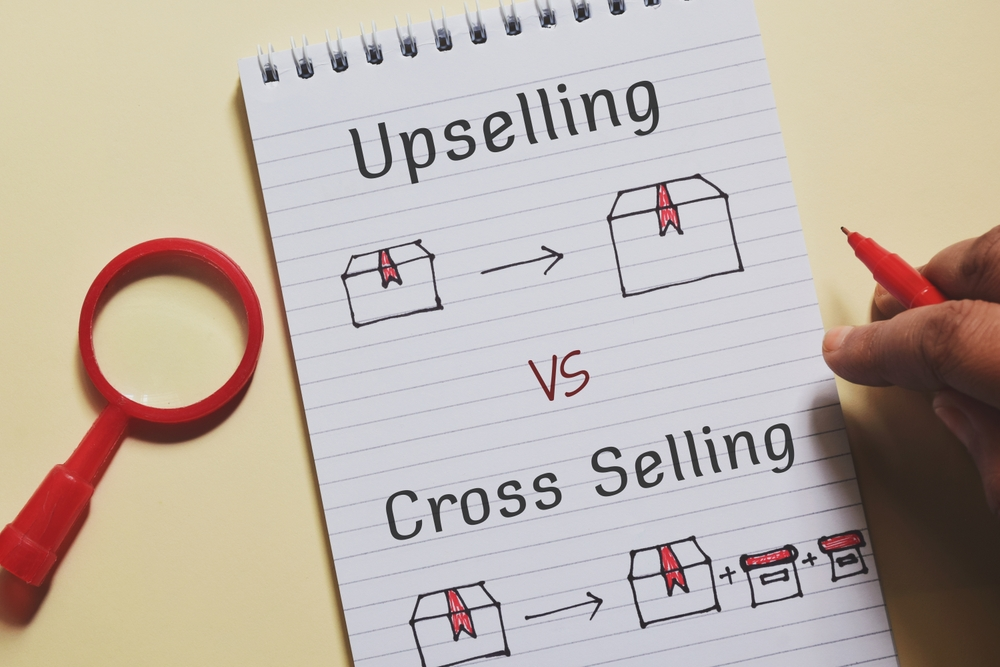
Upselling encourages a customer to choose a higher-value version of the product or service they are considering. Cross selling introduces an additional product or service that complements the original purchase.
Marketing can support both by identifying customer needs, improving how offers are presented and creating campaigns that encourage customers to purchase relevant additional products or services.
What is upselling in marketing?
So, what is upselling in marketing? It means encouraging a customer to purchase a more capable, comprehensive or higher-value version of what they were already considering. Upselling has been described as moving a customer towards a more expensive version of a product or service.
This could mean promoting a larger package, a premium version, additional capacity or a higher specification option where it genuinely offers more value to the customer.
Marketing plays an important role here because customers need to understand why the upgrade matters, and isn’t just about making them spend more with you. Clear website copy, comparison tables, targeted emails, landing pages and well-structured campaigns can make the difference between simply displaying a more expensive option and properly demonstrating its value.
Make the upgrade worthwhile
Upselling is a sales strategy, but the success of it often depends on communication.
Useful reasons for upgrading might include:
- Greater functionality
- More capacity
- Additional support
- Better coverage
- A more complete solution.
Marketing can help turn those benefits into clear, persuasive messages. If customers can quickly understand what they gain from moving to a higher-value option, the decision becomes easier to justify.
What is cross selling in marketing?
What is cross selling in marketing? Instead of upgrading the original purchase, cross selling encourages customers to purchase something complementary. Cross selling is offering related products or services that address additional customer needs.
Someone buying a laptop might also need accessories, insurance or software. A customer purchasing a new kitchen might also require flooring, lighting or decorating. A company investing in a new website may later require photography, digital advertising or SEO.
Marketing helps connect those related needs by making customers aware of services they may not have considered yet.
Cross selling and upselling compared
| Approach | What happens | Simple example |
| Upselling | The customer chooses a higher-value version | Moving from a standard package to a premium package |
| Cross selling | The customer adds a complementary purchase | Adding a related service to the original purchase |
| Both | The customer improves and expands the purchase | Choosing the premium option and adding another relevant service |
Upselling improves the original purchase, while cross selling expands it.
Marketing can create better opportunities to sell more
A good cross selling strategy often starts before a customer is ready to make a purchase.
Marketing gives businesses opportunities to stay in front of existing customers, remind them what else is available and introduce relevant products or services when they are most likely to be useful.
This is part of strategic marketing: understanding customer needs, planning how different services fit together and creating campaigns around genuine opportunities for additional value.
Map the customer journey
Customers do not always need everything at once. One product or service may naturally create another requirement several weeks or months later.
Ask these three questions
- What does the customer commonly need after buying this?
- Which higher-value option could better suit some customers?
- What related product or service would naturally complement the original purchase?
These answers can help shape email campaigns, website content, paid advertising, remarketing and ongoing communications.
Use marketing to make upselling more relevant
The best upselling and cross selling does not feel random. It is based on what a customer has already shown an interest in.
Marketing can help businesses use that context more effectively through:
- Targeted email campaigns based on previous purchases.
- Dedicated landing pages for upgrades and related services.
- Website recommendations that connect complementary products.
- Retargeting campaigns aimed at existing customers.
- Clear package comparisons that demonstrate additional value.
- Content that explains when a customer may benefit from upgrading.
Personalised recommendations can be particularly effective because they reduce the number of irrelevant offers customers see.
Instead of promoting everything to everybody, businesses can focus attention on the options most likely to be useful.
Cross selling techniques should follow customer behaviour
The strongest cross-selling techniques are often built around patterns that already exist.
If customers regularly buy one service and then return for another, that creates a marketing opportunity. Rather than waiting for every customer to discover the second service independently, businesses can introduce it earlier through their website, email marketing or follow-up campaigns.
The same principle applies to upgrades. If customers frequently start with one option and move to a higher tier later, marketing can help explain the benefits of that higher tier earlier in the decision-making process.
This can increase revenue while making the buying journey clearer.
Get more value from the customers you already win
Understanding what is upselling and cross selling is relatively straightforward. The bigger opportunity is using marketing to make both techniques more consistent and successful.
Review how your products and services connect. Look at what customers typically buy next, where upgrades commonly happen and which offers naturally complement each other.
From there, marketing can help turn those opportunities into structured campaigns, clearer messaging and better customer journeys.
📞 Call us on 01444 810530
📧 Email connect@growth-by-design.co.uk
📅 Book an initial conversation: https://calendly.com/louisegrowthbydesign/30min
If you liked this, you may also like: Multimodal Marketing: Does AI Know What Your Business Does?
Frequently asked questions about what is upselling and cross selling?
What is the main difference between upselling and cross selling?
Upselling encourages a customer to choose a higher-value version of what they are already considering. Cross selling introduces an additional product or service that complements the original purchase. Both can increase customer value when the recommendation is relevant.
What is upselling in marketing?
Upselling in marketing means using messaging, offers and campaigns to encourage customers towards a more valuable option. This could involve comparison pages, targeted emails or highlighting the added benefits of a premium package. The focus should be on showing why the upgrade is worthwhile.
What is cross selling in marketing?
Cross selling in marketing involves promoting related products or services to customers based on what they are already buying or have previously purchased. Marketing can help by connecting those services across websites, emails and follow-up campaigns. The most effective recommendations usually have a clear connection to the original purchase.
Can upselling and cross selling increase revenue?
Yes, both can increase revenue by generating more value from existing customer relationships. They can also reduce the need to rely entirely on acquiring new customers for growth. The key is making sure additional offers genuinely improve the customer’s purchase.
How can email marketing support cross selling?
Email marketing can introduce relevant products or services after a customer has made a purchase or enquiry. Campaigns can be segmented around previous behaviour so customers receive offers that are more likely to interest them. This makes cross selling more targeted than sending the same promotion to everyone.
How can a website help with upselling?
A website can make upgrades easier to understand through clear package comparisons, pricing tables and benefit-led copy. It can also highlight premium options at key points in the buying journey. Good website structure helps customers compare choices without making the upsell feel forced.
When should you cross sell to a customer?
The best timing depends on the product, service and customer journey. Sometimes a related offer makes sense during the original purchase, while in other cases it may be more relevant weeks or months later. Looking at previous customer behaviour can help identify the strongest opportunities.
Are personalised recommendations important for upselling?
Personalised recommendations can make upselling more relevant because they are based on what the customer has already shown an interest in. Instead of promoting every premium option, businesses can focus on the upgrade that best matches that customer’s needs. This can improve both conversion and the overall customer experience.
What makes a good cross selling strategy?
A strong cross selling strategy starts by identifying which products and services naturally work together. Marketing can then connect those offers through website content, email campaigns, remarketing and ongoing customer communications. The strategy should be reviewed regularly to see which combinations actually generate useful results.
Can upselling and cross selling improve customer relationships?
They can, provided the recommendations are genuinely useful. Helping customers discover a better option or a complementary service can make the buying journey more convenient. Poorly matched or overly frequent offers, however, can quickly have the opposite effect.