
TL;DR
What constitutes a good website in 2026? – A good website in 2026 must load instantly, prioritise mobile users, and state your value within seconds. It acts as an active marketing engine, not a static digital brochure.
- Instant Clarity: Visitors must understand your offer immediately.
- Mobile-First Design: Over 50% of traffic is mobile.
- Trust Signals: Reviews and case studies must be visible.
- Clear Actions: Enquiries should take only one click.
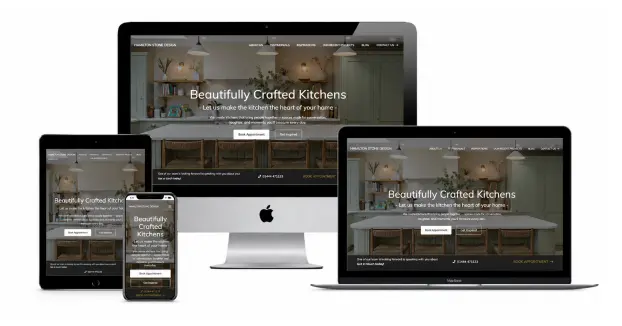
What constitutes a good website in 2026 is entirely different from a few years ago. Today, your site faces higher stakes. It must work harder, load cleaner, and explain your value faster. It needs to feed direct answers to AI search engines while building immediate trust with human visitors.
What this means for your business
Your website is no longer just a digital brochure. It is your primary credibility test.
Prospects rarely land neatly on your homepage anymore. Instead, they arrive via:
- AI Search Results (AEO)
- Google Business Profiles
- Direct Service Pages
- Specific Blog Posts
- Social Media Ads
Because entry points vary, your website must make sense from every angle. It must be clear to humans, indexable for AI crawlers, and optimised for conversions.
A successful 2026 website does not rely on heavy animations or massive hero images. It succeeds by answering what you do, why it matters, and how to contact you.
Looking good is not enough
A website can look finished and be visually attractive, but still fail your business.
That is one of the biggest changes for websites. With templates, page builders and automated content tools, it has become much easier to create something that looks acceptable at first glance. The problem is that many of those websites feel the same. The words could belong to anyone; the layout follows the same pattern as every other business in the sector, and the user journey has not really been thought through. This is not enough to convert potential prospects into active prospects.
That is why good website design needs more than just visual polish and fancy imagery. It needs a clear point of view and a difference from your competition. Your website should show what your business actually does, who it is for, what makes your approach different, and why someone should feel confident choosing you.
- If the copy on your homepage could apply to five other businesses in your industry, it is too vague.
- If the first screen looks nice but does not explain the value of what you do, it is not doing enough.
- If the design looks impressive but people cannot find the information they need, it is not a good website.
It is just a good-looking obstacle to your business getting the leads and enquiries you want.
Your website needs to be clear within seconds
People do not arrive on your website with endless patience. They skim, compare, scroll, leave tabs open, move between devices and make quick judgements. Your website needs to help them understand the basics about your business almost immediately.
That does not mean every page has to be stripped back until it feels plain. It means your structure has to be sensible.
- Your homepage should make it clear who you help, what you offer and what problem you solve with an easy call to action, whether that is a form, phone number or button to click.
- Your service pages should explain the service properly and why you are different from the competition, not just make broad claims about quality and experience (which everyone does!).
- Your navigation should be simple enough that people do not have to think too hard about where to go next.
Good layout is not just about where text and images sit on a page. It is about the order in which the information is presented. A strong page guides your potential customer, from interest to understanding, then from understanding to action.
For most business websites, that means you need a clear opening message, meaningful service sections, proof that you know what you are doing, using reviews and case studies, answers to common questions, visible calls to action and an easy way to make contact. The exact structure will depend on your business, but the principle is the same. People should not have to work hard to understand why they are there.
Mobile-first is now the normal standard
Your website has to work properly on mobile. Long gone are the days of simply shrinking it down, nor just ensuring it technically loads. It has to feel as though it was designed with mobile users in mind from the start.
The way people use websites has changed, and the data backs that up. StatCounter shows that, in May 2026, mobile accounted for 50.29% of global web traffic, compared with 48.24% for desktop and 1.48% for tablet. That means mobile is no longer a secondary version of the website journey; it is often the main experience your customers have with your business.
DataReportal also reported that 94.6% of internet users go online using a smartphone, which reinforces why mobile-first design needs to sit at the centre of any serious website project.
The scale of mobile internet use is also continuing to grow. GSMA reported that 4.6 billion people, equal to 57% of the global population, were using mobile internet on their own device in 2024. In its 2025 update, GSMA reported that this had risen to 4.7 billion people, or 58% of the world’s population.
Google also makes the importance of mobile very clear. Its mobile-first indexing guidance explains that Google uses the mobile version of a site’s content for indexing and ranking. In practical terms, if your mobile website is slow, awkward, thin on content or difficult to use, that can affect far more than user experience. It can affect how your website is understood and ranked.
Mobile behaviour also affects how people research, compare and buy. Google has reported that six in 10 internet users start shopping on one device but continue or finish on another, while 82% of smartphone users consult their phones on purchases they are about to make in-store.
Local search is another reason mobile matters. Google research found that 76% of people who search on their smartphones for something nearby visit a business within a day, and 28% of those searches result in a purchase. For local service businesses, this makes your website, Google Business Profile and mobile experience part of the same decision-making journey.
This means readable text, buttons that are easy to tap, easy to understand menus, forms that are not frustrating and are easy to complete, images that are not too big, so they do not slow everything down, and page sections that stack cleanly without making the user scroll through endless empty space.
All of that matters because mobile experience affects how people judge your business. If the site feels cramped, slow, or awkward, that feeling carries over to the brand. It may not be fair, but it is how users behave. A clunky mobile website can make a good business feel less professional than it really is.
Speed is part of trust
Google’s own guidance states that 53% of visits are likely to be abandoned if pages take longer than three seconds to load. For your business, that means a slow website can lose potential enquiries before someone has even read what you do.
There is also a direct connection between speed and conversions. Research shared through web.dev found that a 0.1 second improvement in mobile site speed increased conversion rates by 8.4% for retail sites and 10.1% for travel sites. Hence why page speed should not be treated as a technical extra. It is part of how your website earns trust and turns interest into action.
Page speed is not just a technical issue for your potential customers; it is a trust issue, too. A slow website makes people impatient before they have even read what you do. It can damage enquiries, increase drop-off, and make paid traffic more expensive because you are paying to send people to a page that does not give them a good experience.
This is where terms such as ‘Google site speed’, ‘site performance tips’, and ‘increase page speed WordPress’ become more than SEO phrases. They point to a real business issue. If your WordPress website has too many plugins, oversized images, poor hosting, unused scripts or heavy design features, it may look fine but perform badly.
A proper WordPress speed optimisation service should not just run a score and declare the job done. It should look at what is slowing the site down, how the site behaves on mobile, whether key pages load quickly, whether images and video are handled properly, and whether the website remains stable as more content is added.
Your website does not stay fast by accident. It needs regular checking, especially if you are adding blogs, landing pages, tracking tags, forms, plugins, pop-ups, booking systems or new design features over time.
Website accessibility helps everyone
Website accessibility is often discussed as though it is only about compliance, but that misses the wider point. Accessible websites are usually better websites for everyone.
Good accessibility standards support clear headings, readable text, strong colour contrast, sensible navigation, useful image descriptions, keyboard-friendly design, well-labelled forms and content that is easier to understand. These things help users with specific access needs, but they also help tired users, mobile users, older users, distracted users and anyone trying to find information quickly.
There is also a search and reputation benefit. A website that is easier to read, easier to navigate and better structured is usually easier for search engines and AI tools to interpret. It also sends a stronger trust signal because it shows that your business has thought about the user experience properly.
Trust signals need to be easy to find
Buyers are more sceptical now, and understandably so. They have seen exaggerated claims, vague promises, over-polished marketing and content that sounds like it was generated without any real understanding of the business. Your website needs to address that scepticism calmly and clearly, and ensure your business comes across as genuine and human (not all AI-written, with em dashes and short, one-line paragraphs).
That means reviews should be easy to find case studies should show real examples; team pages should help people understand who they are dealing with; service pages should explain what is included, how the process works and what someone can expect. Policies, privacy information and terms should not feel hidden. If pricing cannot be shown in full, there should still be useful guidance about starting points, factors that affect cost or how the quoting process works.
Trust is not built by one testimonial at the bottom of a page. It is built through the whole experience of your website. The words, design, photography, structure, proof, contact details, process information and follow-up journey all add up.
When users feel informed, they feel safer enquiring. When they feel unsure, they hesitate, which is the difference in your business gaining that potential prospect or losing them.
A good website should answer real questions
One of the most important changes in search is that people are asking more specific questions. They are not always typing short keywords into Google; rather, they are asking full questions via search engines, voice search, and AI tools. That means your website content needs to be useful enough to answer those questions properly.
This is where FAQs can help, but only if they are done well. A weak FAQ section that repeats the same sales points in a different format will not add much. A useful FAQ section answers the questions people genuinely ask before they buy, book, enquire or compare.
For a service business, that might include how the process works, how long something takes, what is included, whether there are ongoing costs, what happens after an enquiry, how the business is different, and what someone should prepare before getting started.
For AI search, clear questions and answers matter because they make your content easier to understand; for your potential customers, they reduce annoyance by removing uncertainty, and the best FAQs are not filler; they are part of the sales journey for your business and should be helpful for users and feed AI-driven answers.
Your website should support conversion, not just traffic
Getting people to your website is only half the job. The next outcome you want is for them to take action.
That is why good website design needs to include conversion thinking.
- Calls to action should be visible, but not aggressive.
- Forms should be simple, but still collect what your business needs.
- Contact options should be easy to find.
Service pages should guide people towards the next step, whether that is calling, booking, downloading, sending an enquiry or reading more before they decide.
Not every website visitor is ready to contact you immediately; some people need a clear primary call to action, while others need a softer next step. That might be reading a related blog, looking at case studies, downloading a guide, joining an email list or booking a review. A good website gives people sensible ways to move forward without making every page feel like a hard sell.
That is also why tracking is vital; you need to know which pages people visit, where they leave, which forms are being completed, what happens on mobile, and which marketing channels are actually driving enquiries. If you never check site ranking, user behaviour, or conversion data, you are guessing. Having Google Search Console and Google Analytics is essential for this and for your business’s peace of mind.
Common website features and advanced features both have a place
A good website does not need every feature available. It just needs the right features for your business and your potential prospects.
Common website features include clear navigation, service pages, contact forms, reviews, case studies, blog content, image galleries, FAQs, policy pages, tracking, search-friendly page titles and strong calls to action. These are the foundations, and they matter because they shape how easily people can understand and trust your business.
Advanced features can also be valuable when they serve a clear purpose. These might include booking systems, calculators, customer portals, intelligent search, live chat, automated follow-up, CRM integration, e-commerce, gated resources or tailored content based on user behaviour.
The phrases “common website feature” and “advanced feature” are awkward, but their intent is useful. Your website should not be overloaded with features for their own sake. It should include the features that help your customers make decisions and help your business handle enquiries properly.
Your website needs to connect with the rest of your marketing
Your website should not sit separately from your marketing; instead it should support it.
- If you are running Google Ads, your landing pages need to match the intent behind the search.
- If you are investing in SEO, your content needs to be structured properly and updated consistently.
- If you are using social media, the pages people land on need to feel like the same business they saw in the post.
- If you send email campaigns, the website needs to continue the journey rather than feel disconnected.
Growth by Design looks at the bigger picture because a website is not just a design project. It is part of your digital marketing, search visibility, content strategy, brand, lead generation, and customer experience.
That is also why a website can quietly hold everything else back. You can have strong ads, good social content and useful blogs, but if your website is slow, unclear or unconvincing, the whole system weakens.
What we look for when reviewing your website
When we review a website, we are not just looking at whether it looks modern. We are looking at whether it is doing its job. Our specialist web team will look at whether:
- your message is clear
- the page structure makes sense
- the content is useful
- your service pages are strong enough
- the site works properly on mobile
- speed is affecting performance
- the user journey is easy to follow
- trust signals are visible
- tracking is in place
- the site is built to support SEO and AI search.
We also assess whether your website reflects your business. That is important because generic content weakens positioning. Your website should not sound like everyone else. It should reflect your expertise, your approach, your standards and the value you bring to your customers. Our aim is that a good website should give people confidence before they ever speak to your business in person.
So, what constitutes a good website?
A good website in 2026 is clear, fast, mobile-first, accessible, trustworthy, easy to use and built around real customer behaviour. It should explain your business properly, answer the questions people actually ask, support your visibility in search, help AI tools understand your content, and make it easy for the right customers to take the next step.
It should also be specific. Your website should not feel like it could belong to anyone in your industry. It should show what makes your business credible, helpful and worth choosing.
Most importantly, your website should work as part of your wider marketing. It should support SEO, Google Ads, social media, email marketing, content strategy, lead generation and long-term business growth.
At Growth by Design, we build and review websites with that full picture in mind. We care about how a website looks, but we care just as much about whether it is clear, measurable, search-friendly, easy to use and commercially useful, because your website should not just exist online. It should help your business grow.
📞 Call us on 01444 810530
📧 Email connect@growth-by-design.co.uk
📅 Book a time that suits you: https://calendly.com/louisegrowthbydesign/30min
If you enjoyed reading this article, you may also enjoy How to optimise your Google Business Profile in 2026 – Growth by Design
FAQs
What constitutes a good website for a business in 2026?
A good business website in 2026 needs to be clear, fast, mobile-friendly, accessible, trustworthy, and built around how people actually search and make decisions. It should explain what your business does, show why people should trust you, answer useful questions and make it easy for someone to take the next step.
Does good website design still matter if the content is strong?
Good website design still matters, but design and content need to work together. Strong content can be weakened by poor layout, slow loading, awkward mobile design or confusing navigation. Equally, a beautiful design will not perform properly if the message is vague or the user journey is unclear.
Why is website speed so important?
Website speed matters because people lose patience quickly when pages take too long to load. Slow pages can reduce enquiries, increase bounce rates and make paid marketing less efficient. Speed also affects how professional your business feels, especially on mobile.
How can I tell if my website is too generic?
Your website may be too generic if the copy could apply to several other businesses in your sector. Look for vague phrases, repeated claims, stock-style wording and pages that do not explain your actual process, experience or point of difference. A good website should sound like your business, not like a template.
What website features does my business actually need?
Most businesses need clear navigation, strong service pages, visible contact options, reviews, case studies, FAQs, privacy information, tracking and clear calls to action. More advanced features, such as booking systems, calculators, live chat or CRM integration, should only be added when they genuinely support your customers and your business process.
How often should a website be reviewed?
A website should be reviewed regularly, not just when it starts to look dated. Speed, content, rankings, user behaviour, accessibility, plugins, forms and calls to action can all change over time. A website that worked well two years ago may now be holding back enquiries without anyone noticing.
Why does my website look good but still not bring in enquiries?
A website can look professional and still fail to convert if the message is unclear, the pages are slow, the mobile experience is awkward, or visitors cannot quickly understand why your business is the right choice. Good design should support the user journey, not just make the page look attractive. If people cannot find what they need, trust what they see, or take action easily, enquiries will usually suffer.
What should people understand within the first few seconds of landing on my website?
They should be able to understand what your business does, who you help, why your service matters and what they should do next. That does not mean cramming everything into the first screen, but your opening message, navigation and call to action need to give people enough confidence to keep moving through the site.
Why does my website need to work with the rest of my marketing?
Your website is where most marketing activity eventually leads. Google Ads, SEO, social media, email campaigns, Google Business Profile and referrals all rely on your website to continue the journey properly. If the website feels slow, unclear or disconnected from the message that brought someone there, you can lose the enquiry even when the marketing has done its job.
How do I know if my website is making it harder for customers to contact me?
Look at the journey from the customer’s perspective. If your phone number is hard to find, forms are too long, buttons are unclear, mobile menus are awkward, or service pages do not explain the next step, your website may be adding annoying steps. A good website should make contacting you feel simple, obvious and reassuring.